Lovebird Types and Colors: Pink, Masked and More
There are nine lovebird species and dozens of color mutations. Here is how to tell them apart, including the pink lovebird and the masked lovebird.
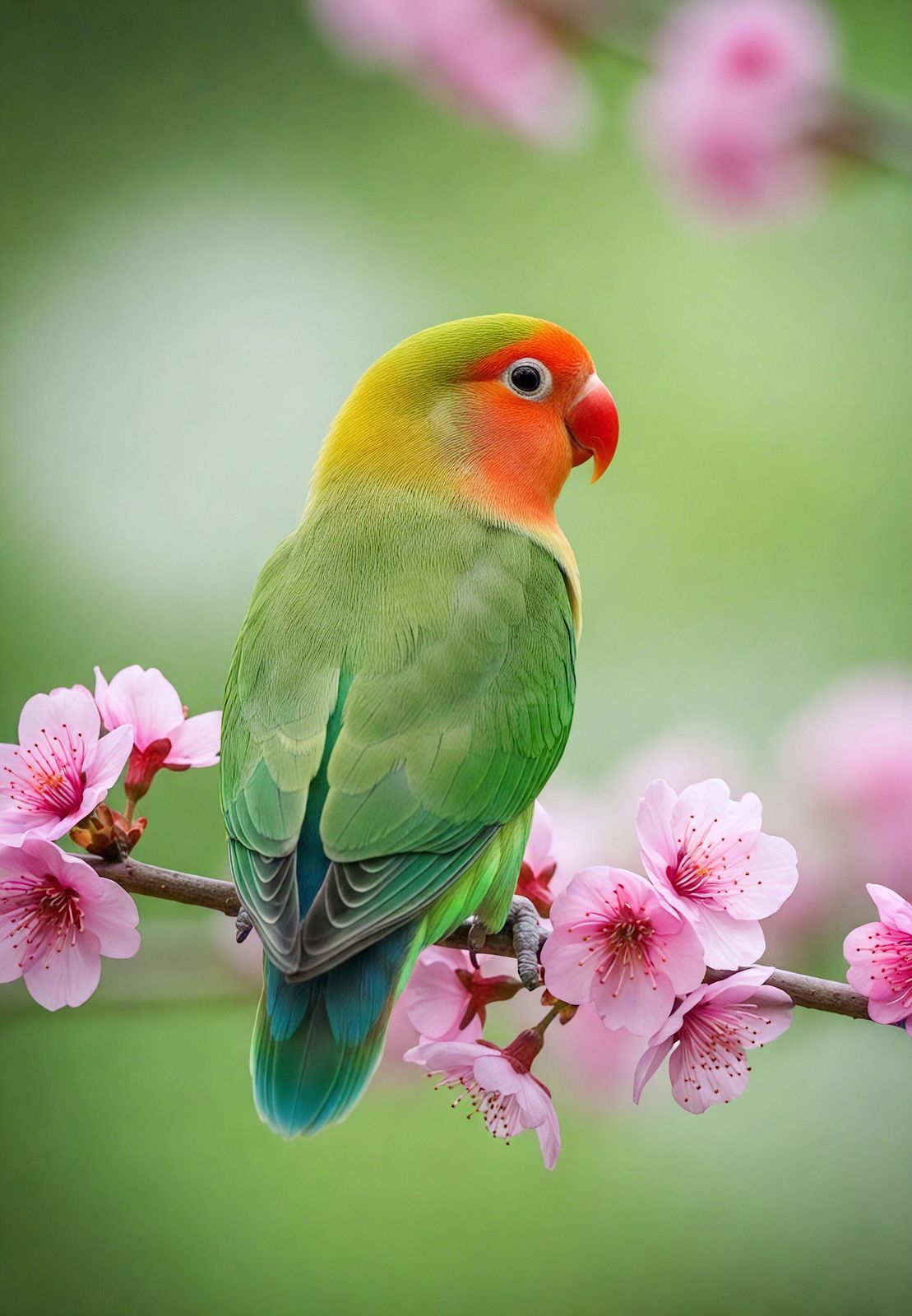
The nine lovebird species
Lovebirds belong to the genus Agapornis and come from Africa and Madagascar. Only a few are common as pets:
- Peach-faced (rosy-faced) lovebird: the most popular pet lovebird, with a rose-pink face and throat and a green body.
- Fischer’s lovebird: a brighter orange-red head, a white eye ring and a red beak.
- Masked lovebird: a dark head, a yellow collar and a white eye ring.
- Lilian’s (Nyasa) lovebird: smaller, with a soft red face and a white eye ring.
- Black-cheeked lovebird: a brownish-black head and cheeks.
- Abyssinian, grey-headed (Madagascar), red-faced and black-collared lovebirds: rarely kept as pets, and often hard to find.
Pink lovebird: the peach-faced lovebird
When people search for a “pink lovebird,” they are almost always looking at the peach-faced lovebird, also called the rosy-faced lovebird. Its scientific name, Agapornis roseicollis, means “rose-necked.” The wild type has a rose-pink to peach face and throat on a green body, with a blue rump.
No recognized lovebird variety is pink all over. If you see a photo of a bright pink bird online, treat it with suspicion, since images are often edited. Color mutations such as lutino, cobalt and blue pied change the body color, and the face color can range from peach to orange to cream.
Masked lovebird
The masked lovebird (Agapornis personatus) comes from Tanzania and is easy to spot:
- A dark brownish-black head, which gives the “mask.”
- A yellow collar across the neck and upper chest.
- A white eye ring and a bold red beak.
- A green body in the standard form, with blue and other color mutations also available.
Masked lovebirds are similar in size to peach-faced lovebirds, usually around 5½ inches long, and are known for being lively and a bit feistier.
Lovebird color mutations
A few of the colors you’ll see on our page.
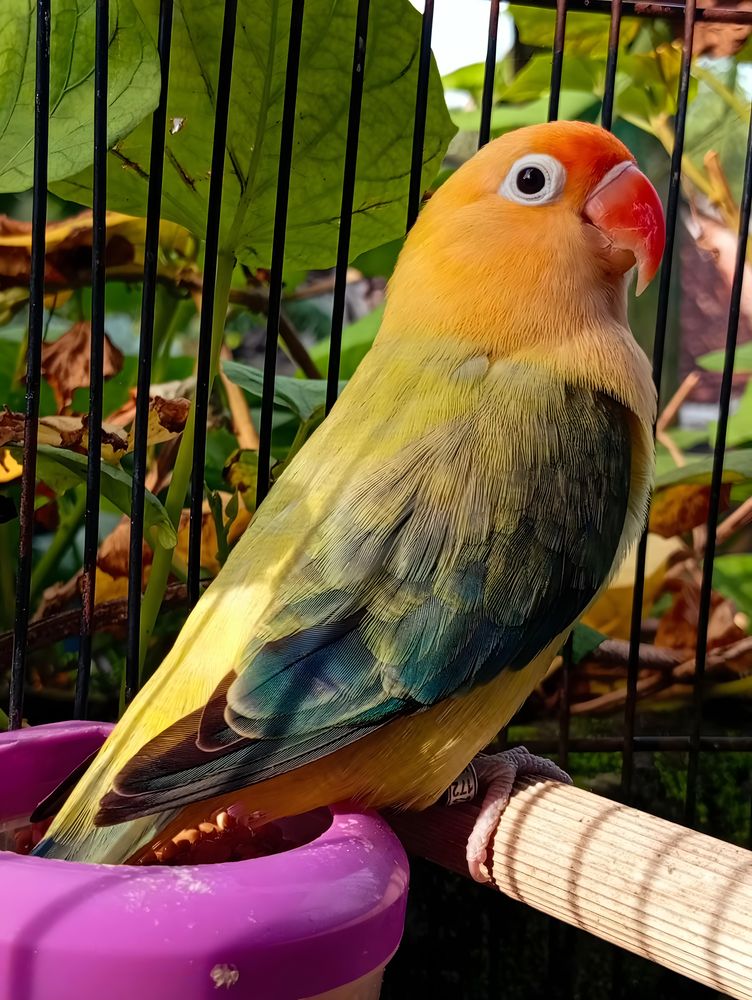
Peach-faced Lovebird
The classic face of the hobby: a warm rose-orange wash across the forehead, cheeks and throat.
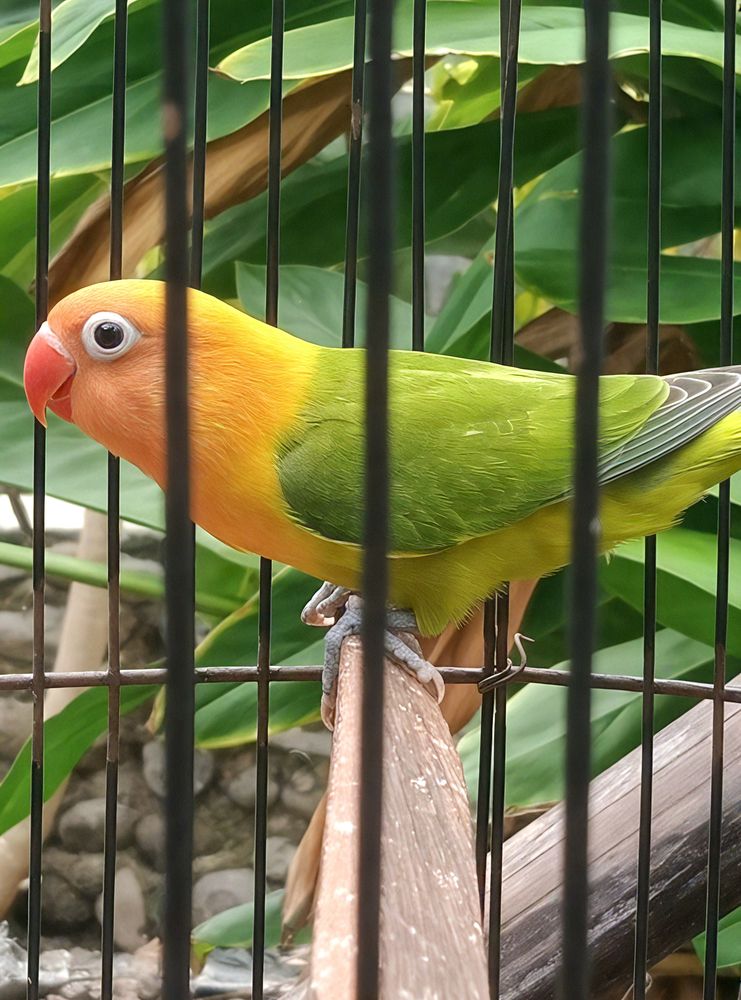
Fischer's Lovebird
A close cousin of the peach-faced, with a brighter orange hood and a crisp white eye-ring.
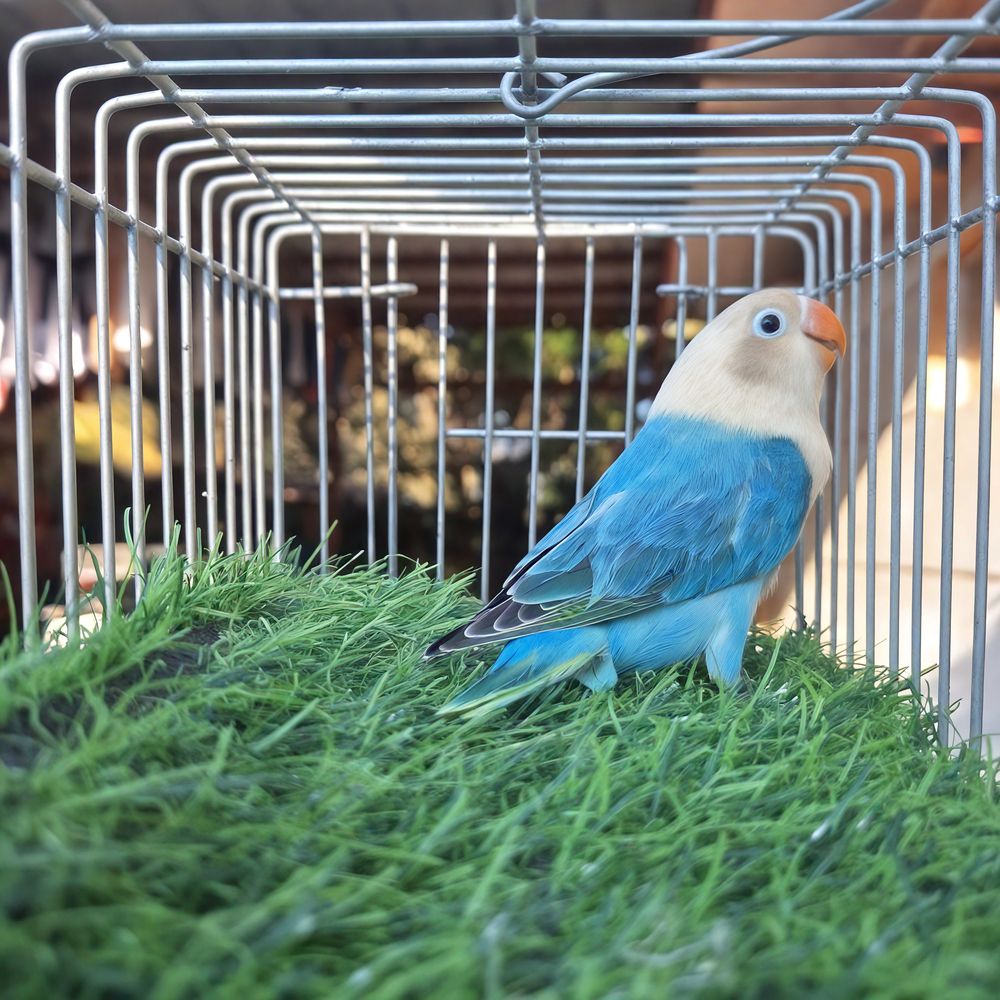
Blue Pied Lovebird
Random patches of blue and cream stand in for the usual even coloring.
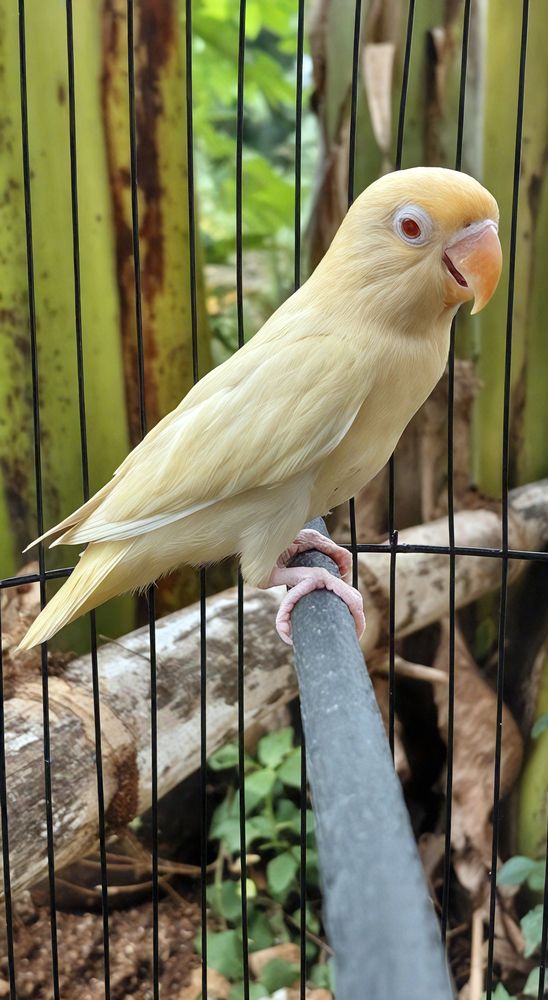
Creamino Lovebird
Pale cream from head to tail, with the telltale red eyes of an ino mutation.
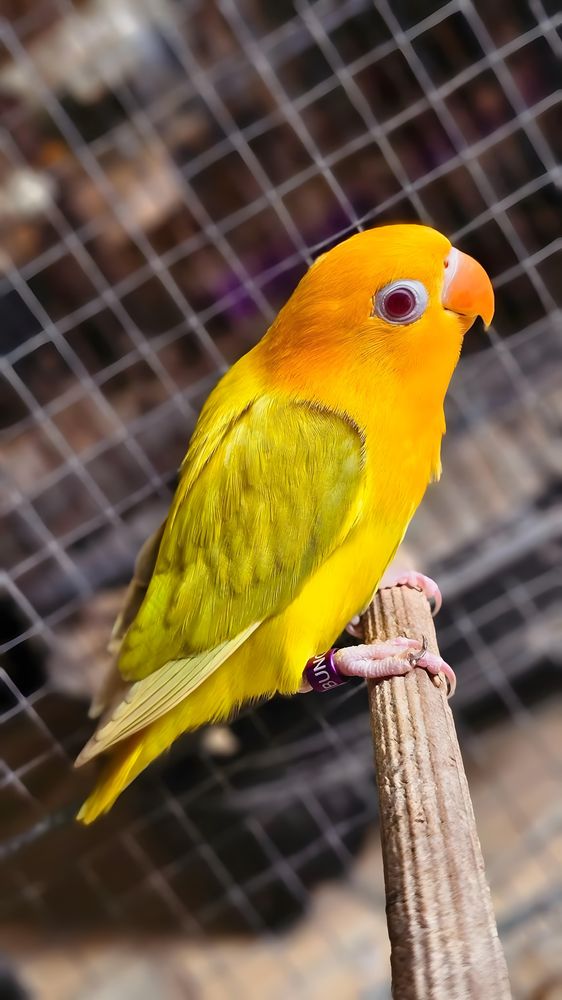
Lutino Lovebird
All the peach-faced shape, none of the green: sunshine yellow with a matching red eye.
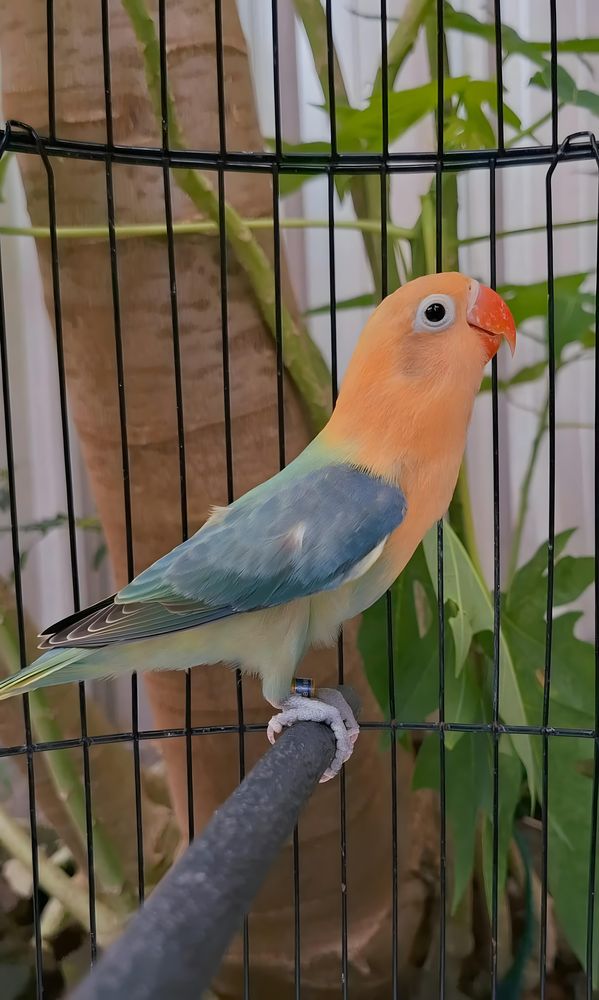
Cobalt Lovebird
A deeper, richer blue than the standard mutation, set off by a soft peach face.
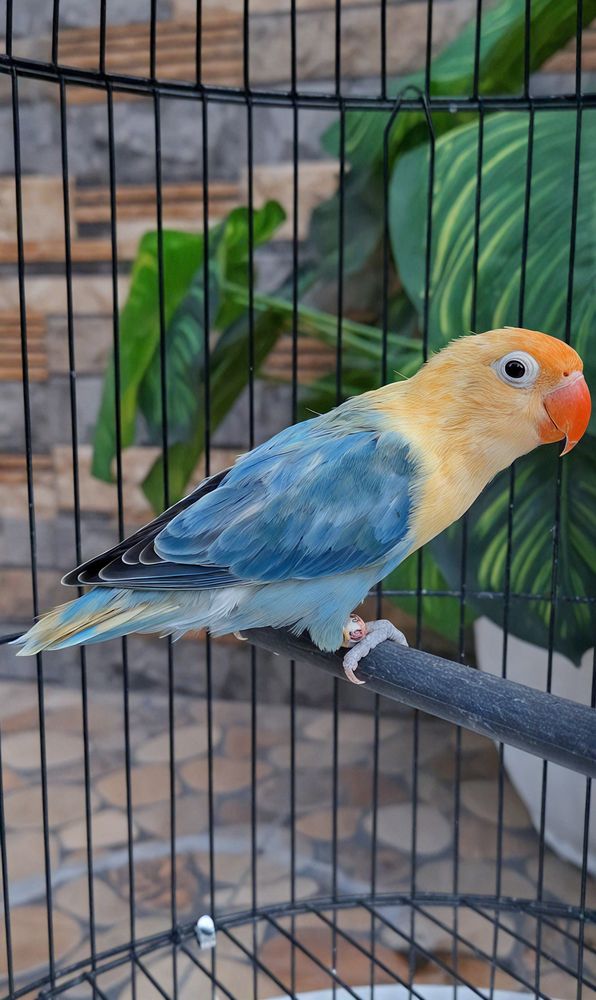
Parblue Split Ino
One of the rarer mutation combinations: softened blue tones under a pale wash.
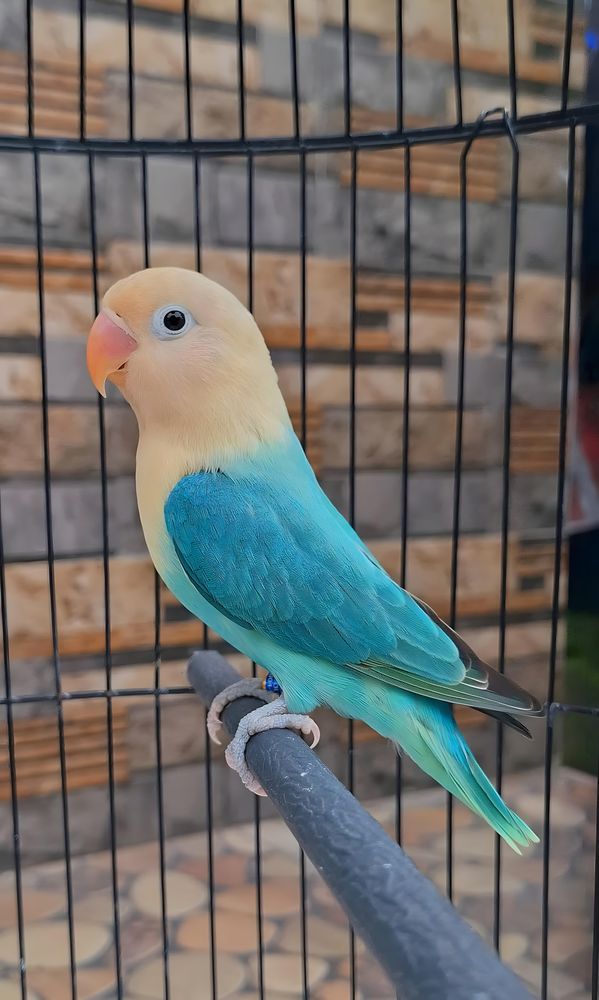
Turquoise Lovebird
A cooler, teal-leaning shift from standard green, same bold personality.
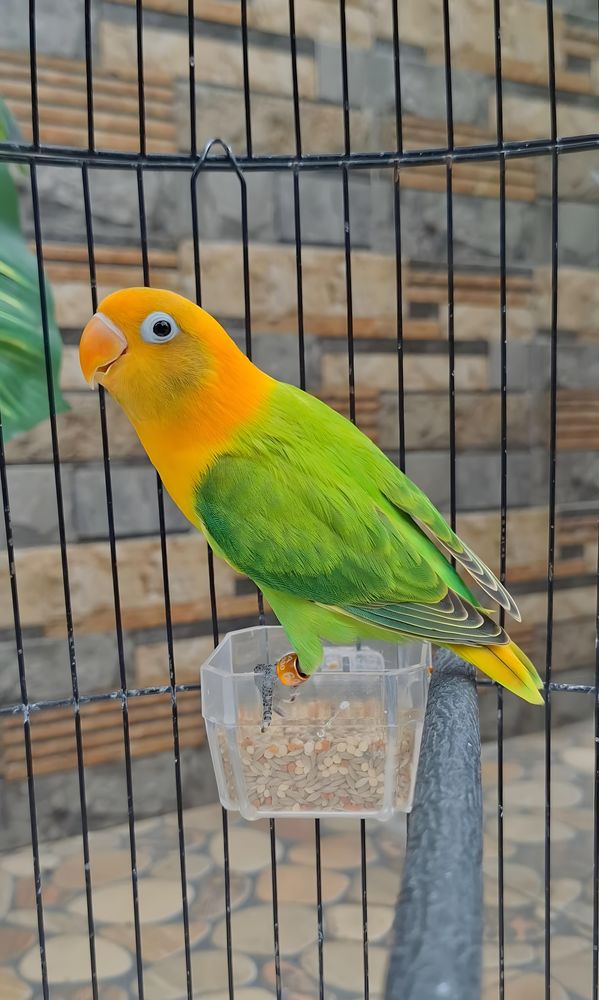
Green Peach-faced
Closer to the wild coloring: vivid green body with the classic orange face.
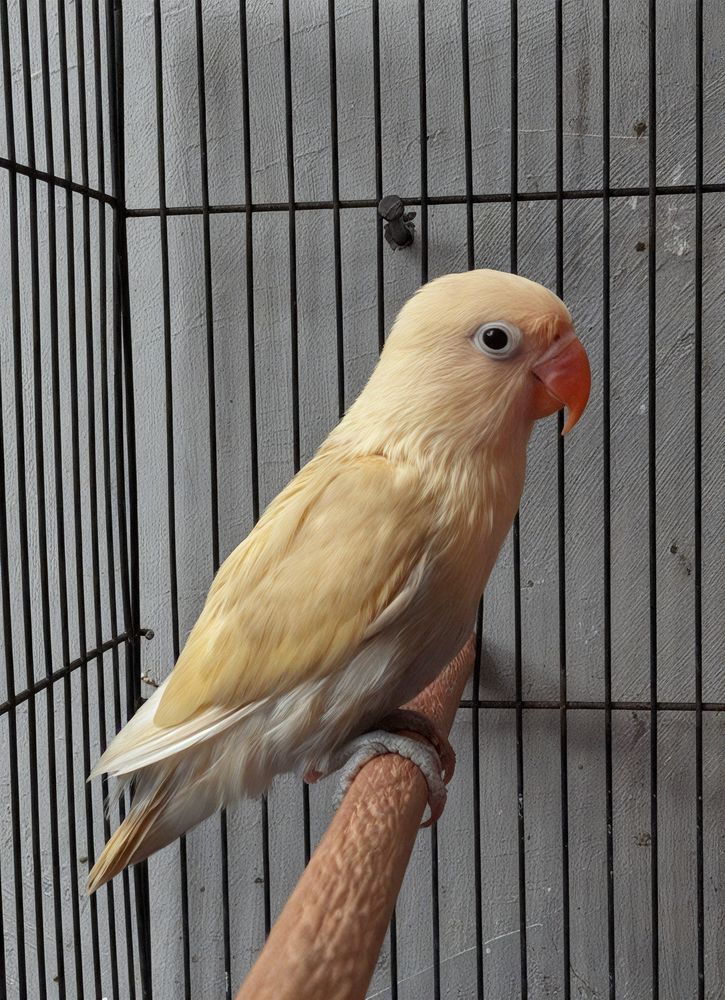
Pastel Yellow
A softened yellow mutation, paler than lutino with muted red eyes.
Lovebird pictures and wall art
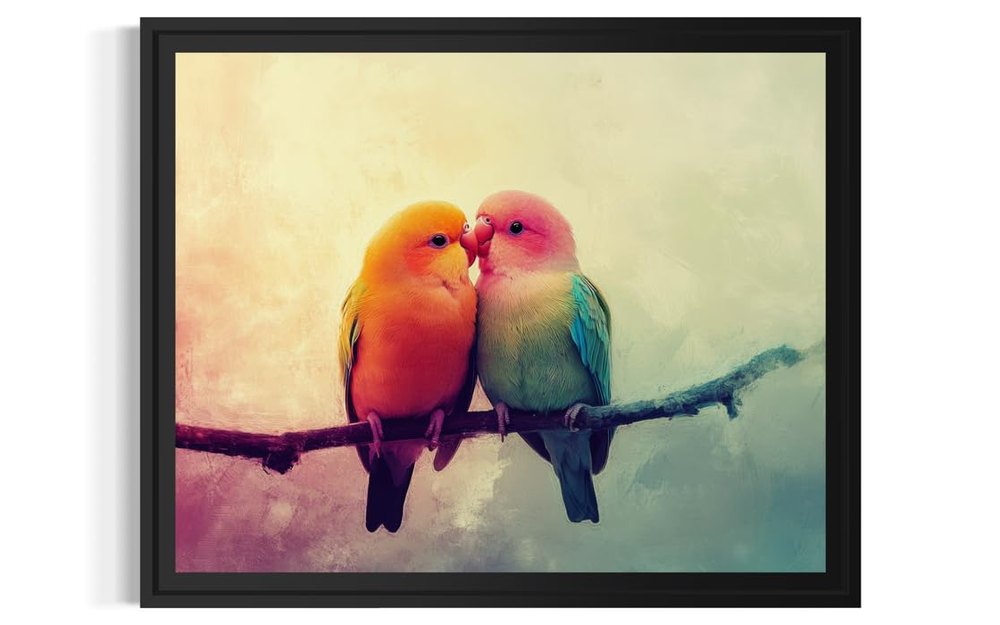
Love the look of a lovebird pair? Browse framed prints and wall art on Amazon.
Lovebird type questions
What is a pink lovebird?
Usually a peach-faced (rosy-faced) lovebird, which has a rose-pink to peach face and throat. No lovebird is pink all over.
What does a masked lovebird look like?
A dark head, a yellow collar, a white eye ring and a red beak on a green body, though other color mutations exist.
Which lovebird is the best pet?
Peach-faced lovebirds are the most popular choice and easiest to find. Fischer’s and masked lovebirds also make good pets, with slightly different personalities.
How many types of lovebirds are there?
Nine species in the genus Agapornis, plus many color mutations of the most common ones.