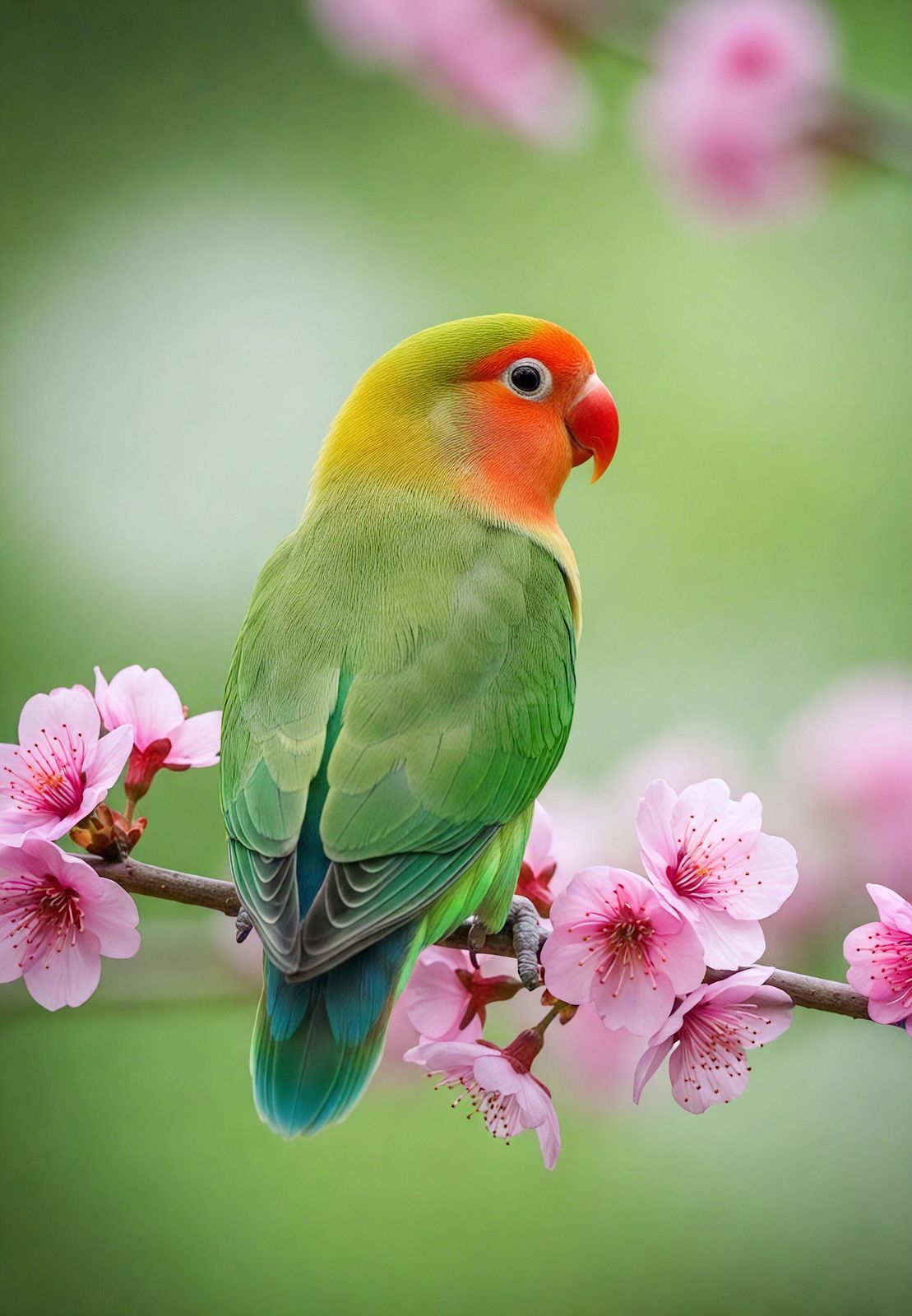
Lovebird Care Guide: Diet, Health and Breeding Basics
A practical lovebird care guide for new owners: what to feed, how to set up the cage, how to keep your birds healthy, and what to know before breeding.
Lovebird care at a glance
- Lifespan: commonly 10–15 years, sometimes longer with good care.
- Size: about 5–6½ inches (13–16 cm) long.
- Sleep: 10–12 hours of dark, quiet rest each night.
- Social needs: daily interaction, or a bonded companion bird.
- Vet care: an annual check-up with an avian vet is a good habit.
Daily care routine
- Give fresh water every day and wash the dishes, since water gets dirty quickly.
- Remove uneaten fresh food after a few hours so it doesn’t spoil.
- Spot-clean droppings, and change the tray liner regularly.
- Spend time with your birds every day, talking, offering treats or letting them out in a safe room.
- Keep a consistent sleep schedule with lights out and a quiet room.
Love birds food: what to feed your lovebirds
Most avian vets recommend a pellet-based diet, supplemented with fresh vegetables, a little fruit, and seed as a smaller part of the mix. An all-seed diet is high in fat and low in several nutrients.
- Good extras: leafy greens, carrot, broccoli, bell pepper, sweet potato (cooked), apple (no seeds) and berries.
- Never feed: avocado, chocolate, caffeine, alcohol, onion, garlic or salty snacks. Fruit pits and apple seeds should also be removed.
- Introduce changes gradually. Lovebirds can be stubborn eaters, so mix new food in slowly over a couple of weeks.
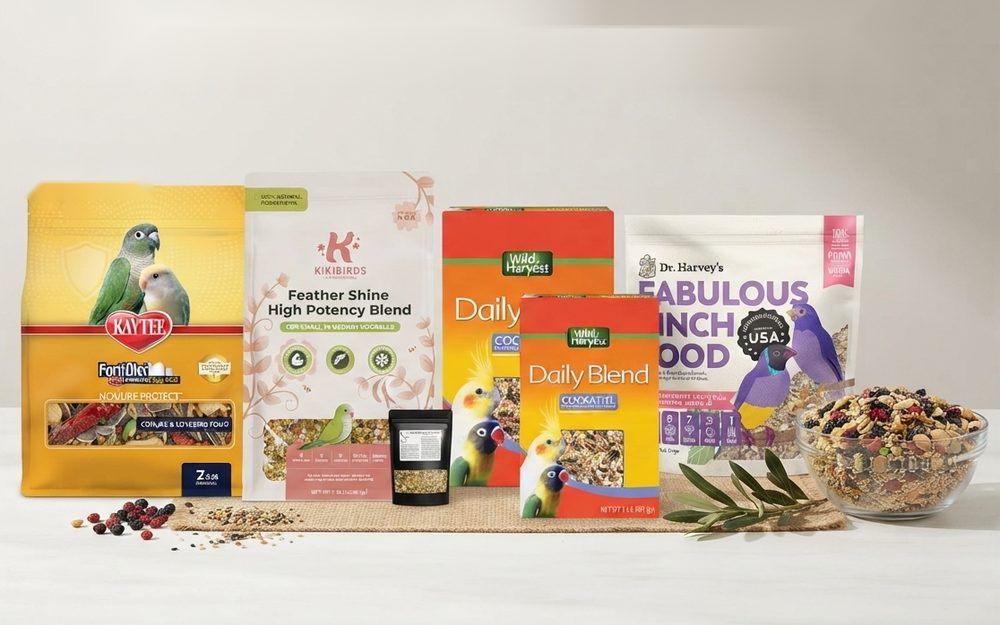
What to look for in love birds food
- Made for small parrots. Choose pellets or mixes sized and formulated for lovebirds, parakeets or similar small birds.
- Variety, not just fatty seed. Sunflower seed is a favorite but high in fat, so keep it as a treat rather than the main course.
- No added sugar or artificial colors. Skip sugar-coated treats and brightly dyed mixes.
- Fresh and well sealed. Check the date, buy sizes you will finish within a few weeks, and store food airtight in a cool, dry place.
Browse love birds food on Amazon, and look at feeder cups and water bottles that suit a small parrot.
Cage and environment
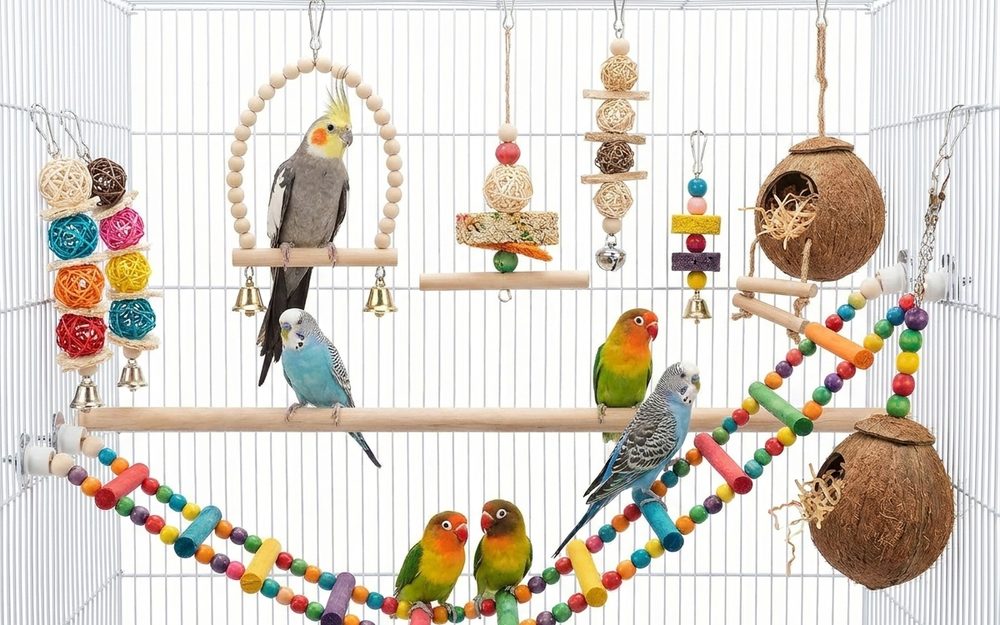
Pick the biggest cage that fits your space, with about ½ inch bar spacing and horizontal bars for climbing. Our lovebird cage guide covers sizes and layout in detail. Keep the cage out of drafts and away from the kitchen, and offer a shallow dish or gentle mist for bathing.
Toys, enrichment and handling
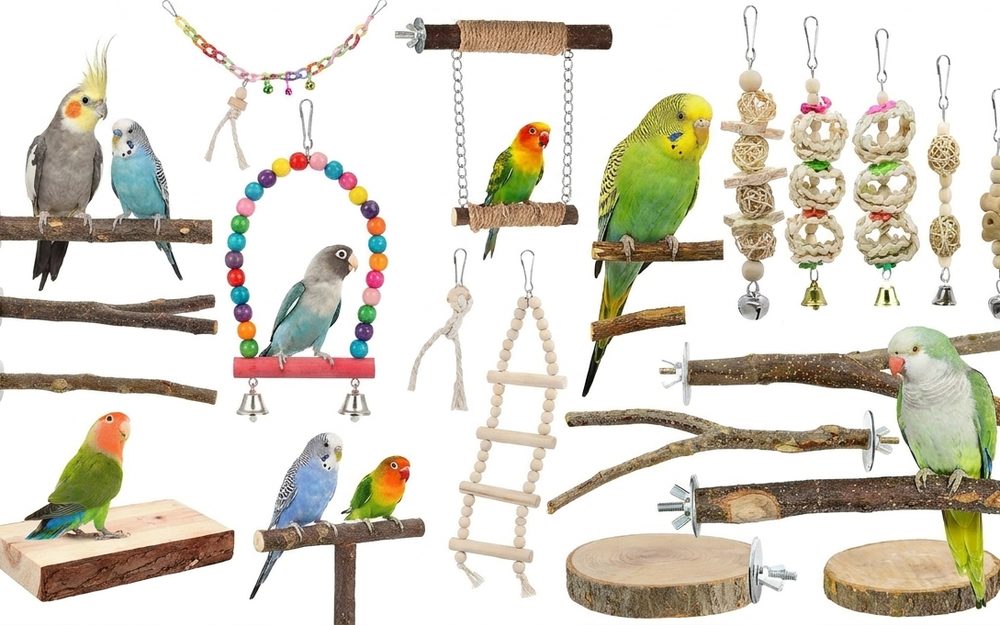
Lovebirds are intelligent and strong-beaked, and bored birds can develop destructive habits. Offer a rotating mix of shreddable, chewable and foraging toys (see our guide to bird cage toys and accessories). Build trust slowly: let a new bird settle for a few days, then offer treats by hand and work up to short handling sessions.
Health and household hazards
- Non-stick fumes. Overheated PTFE (Teflon) coatings can be fatal to birds, so keep birds well away from the kitchen and check cookware, air fryers and heat lamps.
- Other airborne irritants: smoke, aerosols, scented candles, plug-in air fresheners and strong cleaning products.
- Open windows, ceiling fans and other pets during out-of-cage time.
- Warning signs to act on: fluffed-up feathers for long periods, tail bobbing while resting, changes in droppings, loss of appetite, or sitting on the cage floor. Call an avian vet promptly.
All about breeding lovebirds
Lovebirds are cavity nesters and breed readily in captivity, but breeding is a real commitment. Here are the basics:
- Maturity: most pairs are ready at around a year old. Younger birds can have trouble with eggs and chicks.
- Nest box: a box roughly 6–8 inches on each side, with a safe entrance hole and plenty of nesting material.
- Nesting behavior: peach-faced lovebirds famously tuck strips of paper or leaf into their rump feathers to carry them, while Fischer’s and masked lovebirds carry material in their beaks.
- Eggs and chicks: clutches usually run 3–6 eggs, incubation takes about 23 days, and chicks typically fledge at around 5–6 weeks.
- Before you start: make sure you have good homes lined up for the chicks, and talk to an avian vet or an experienced breeder.
If you are setting up a breeding pair, browse lovebird nest boxes on Amazon.
Hand-fed chicks
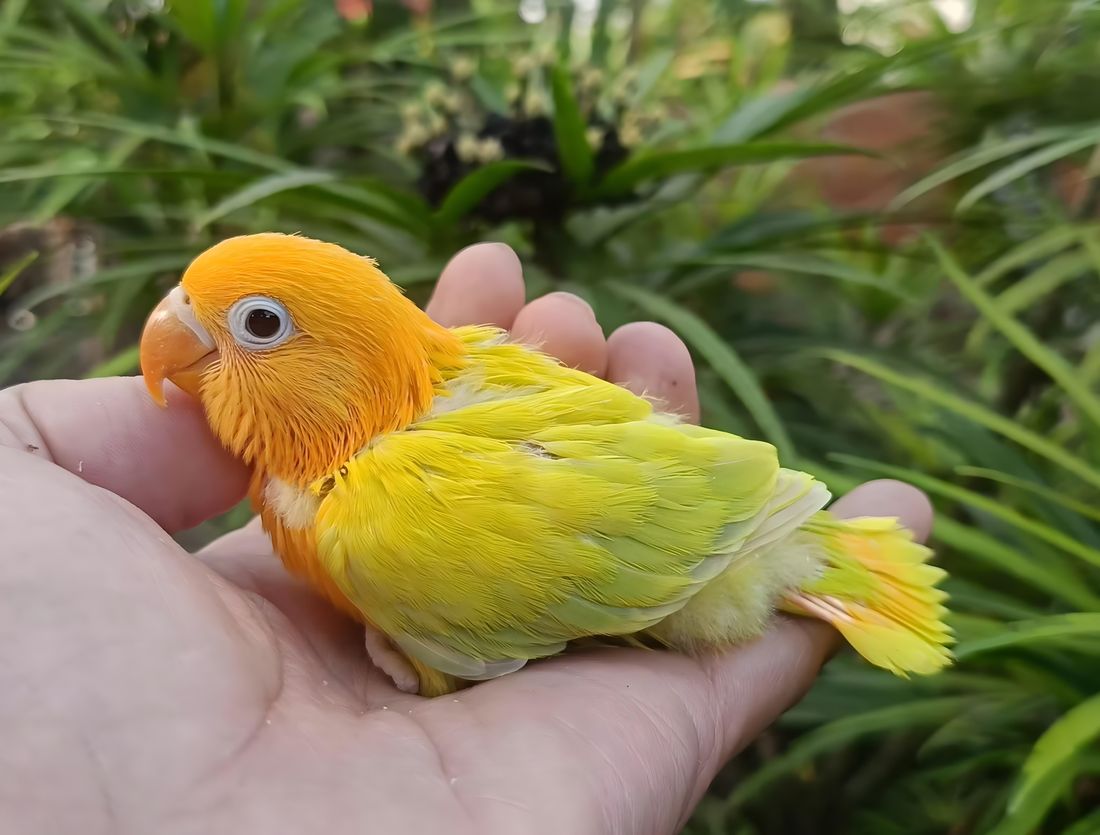
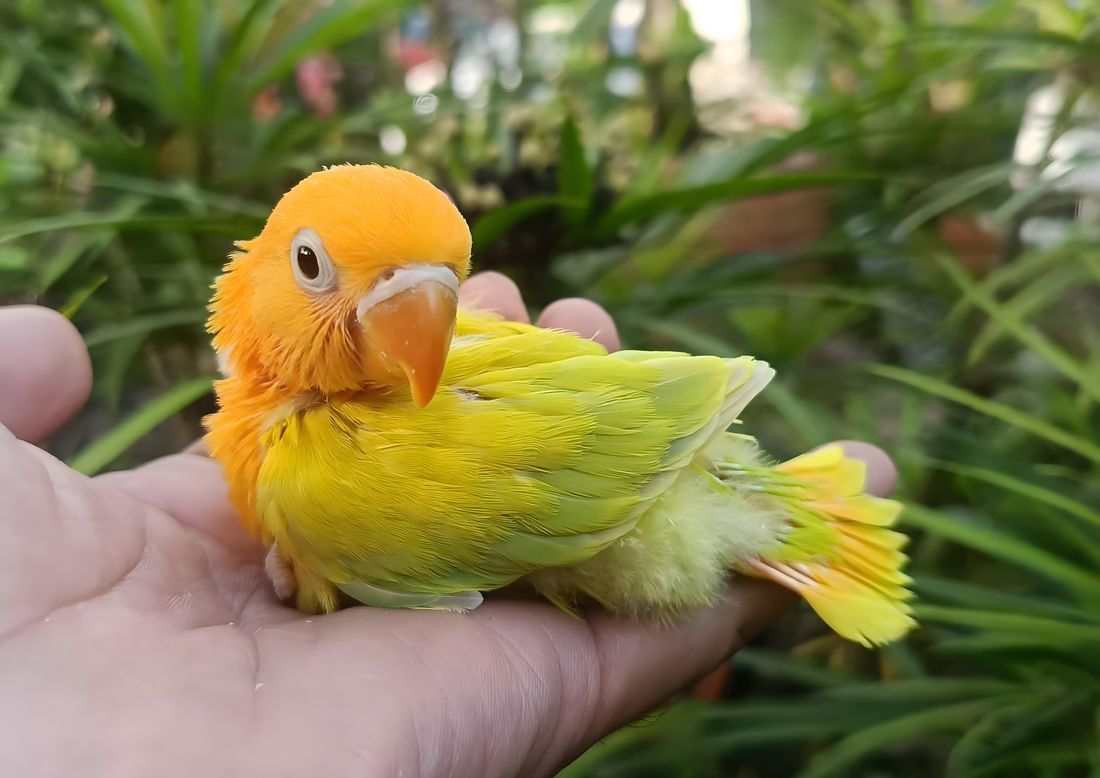
A few weeks old and still growing into their feathers. Hand-feeding is a skill best learned from an experienced breeder or avian vet.
Lovebird care questions
How long do lovebirds live?
Commonly 10–15 years, and some live longer with a good diet, a spacious cage, regular vet care and plenty of interaction.
Can a lovebird live alone?
Yes, if it gets plenty of daily attention from you. A single bird often bonds closely with its owner, while a pair bonds with each other. Either can work; just plan for the time your bird needs.
What do lovebirds eat?
A pellet-based diet with fresh vegetables, a little fruit and seed in moderation. Avoid avocado, chocolate, caffeine, alcohol, onion and garlic.
What is the best love birds food?
There is no single best brand. Look for a pellet-based food made for small parrots, add fresh vegetables daily, and keep seed and treats to a smaller share. An avian vet can help tailor the diet to your birds.
Are lovebirds noisy?
They are small but vocal. Expect chirps and louder calls, especially at dawn and dusk, and more noise when they are bored or excited.